
Establishing the Else Kröner Center Global Child Health (EKC) in Malawi

Situation:
Several initiatives have improved paediatric care through guidelines, training, and increased staffing. However, challenges remain, including limited institutional capacity, fragmented coordination, and weak long-term structures. The Malawi–Else Kröner Child Health Programme (2022–2026) has proven feasibility but lacks sustainable institutionalisation. A fully operational centre is therefore needed to integrate coordination, research, and implementation and strengthen collaboration.
Objectives:
The objective is to improve child health and reduce morbidity and mortality from birth to adolescence in Malawi and beyond. This will be achieved by strengthening paediatric services, expanding training pathways, and establishing the EKC Global Child Health as a national and global hub. The centre will enhance implementation, monitoring, research, and policy advice. Aligned with national and global strategies, it aims to create a sustainable and scalable model for child health systems in low- and middle-income countries.
/
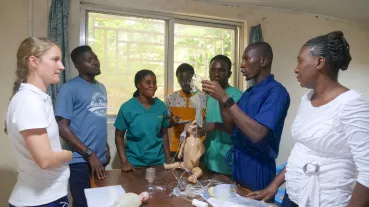
Key activities include establishing the EKC Global Child Health, coordinating projects, and implementing a five-year plan. The centre will support existing programmes in training, NCD care, and ultrasound, while launching education and research initiatives. These include conferences, training courses, postgraduate programmes, and research in areas such as neonatology and chronic diseases.
Long-term funding, strong governance, and capacity building ensure sustainability. Initial support relies on external funding for at least five years, followed by co-financing from partners. Integration into national structures ensures ownership and accountability, while collaboration with academic and governmental institutions strengthens resilience. Research and networking secure lasting impact.
The EKC Global Child Healthis integrated within PACHA, enabling a semi-autonomous model. It combines coordination, research, implementation, and policy advice. Strong international partnerships ensure collaboration. The scalable model can be adapted to other countries.