
Supporting Sustainable Foundations for Newborn and Child Health in Nepal

Situation:
Between 1996 and 2022, Nepal saw a significant reduction in under-5, infant and neonatal mortality. However in the last decade, progress has slowed and neonatal survival has flatlined. An increasing proportion of maternal, newborn and paediatric mortality occurs among severe illness cases requiring referral to and treatment at secondary level hospitals, where the quality of clinical care is suboptimal.
Objectives:
To support improvement in Nepal’s hospital-level clinical care quality and reduce avoidable neonatal and child morbidity and mortality, through strengthened capacity for Nepali paediatric partner agencies to lead care quality improvements nationally, alongside enhanced neonatal and paediatric care delivery at hospital level in Lumbini Province.
National standards and clinical guidelines for major neonatal and paediatric conditions established, endorsed and disseminated.
Measurable improvement in key neonatal and paediatric care quality indicators and reduction in avoidable newborn/paediatric mortality in 10 project hospitals.
Improved institutional presence and organisational capabilities for Nepali partners to effect care quality advocacy and action nationally.
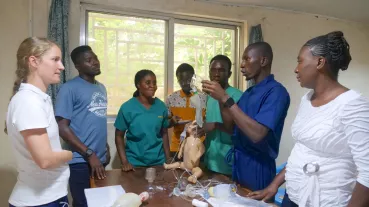
Enhanced capacity of local clinicians to lead sustainable improvements in Lumbini Province to deliver high quality neonatal and paediatric care.
The core to sustainability is the role and leadership of the two partner organisations – NEPAS and PNAN. Supporting growth and functionality of NEPAS and PNAN ensures sustainable in-country institutional capacity in advocating, promoting and mentoring high-quality clinical care standards and practices across Nepal’s health system.
Embedding locally-led, in-situ quality improvement and system strengthening within each hospital, creates a sustainable ongoing process capable of being taken forward by hospitals individually and across the hospital network, as well as being incorporated into national health strategy planning.