
The Else Kröner-Fresenius-Stiftung (EKFS) has launched a special call for proposals to improve child health in developing countries and will fund the following two projects for at least five years with a total of three million euros.
Project: Improvement of Child Health in Low-Resource-Settings through Implementation of Ultrasonography
Organisation: German Society of Tropical Paediatrics and International Child Health (GTP) e.V.
Partner country: Malawi, Tanzania, Nepal
Partner organisation in partner country:
- Pediatric Association Tanzania (PAT), Dodoma Tanzania
- Department of Pediatrics, Muhimbili University Hospital, Daresalaam, Tanzania
- University of Dodoma (UDOM), Dodoma, Tanzania
- Zomba Central Hospital, Zomba, Malawi
- College of Medicine, Blantyre, Malawi
- Department of Pediatrics, Kathmandu University Hospital Dhulikhel, Nepal
Term: 5 years
Situation:
In low resource settings (LRS) as in our partner countries, insufficient medical imaging services contribute to a limited and delayed diagnosis and treatment. Ultrasonography has a major influence on patient management in LRS, as alternative imaging techniques are hardly accessible. Especially children in LRS have limited access. Not only reduced availability but also the necessity of sedation/ narcosis for sectional imaging techniques like MRI or CT Scans in young children present additional obstacles in LRS. Ultrasound as a non-invasive, painless and radiation free imaging technique for diagnostic purposes, intervention and follow up is especially suitable in paediatrics. Through training of local doctors and other health workers (nurses, clinical officers) in paediatric ultrasonography, and by making adequate devices and scientific supervision available, high quality paediatric ultrasonography will be implemented by this project. In cooperation with the partner hospitals, the local and regional need of ultrasonography training will be defined, in order to plan the corresponding training courses and to advertise them locally. In particular the institutions where the GTP has already conducted ultrasound training will be developed into regional training hubs.
Objectives:
- Creation of an international network for intensified and qualitative use of ultrasonography in Paediatrics in LRS (Else Kröner-Fresenius-Network for Paediatric Ultrasound).
- Establishment of an integrated access to ultrasonography in Paediatric and Adolescent Medicine through a continuous offer of ultrasonography training.
- Increasing independence and sustainability of our partners in the improvement of their diagnostic and therapeutic capacities.

- Number of course participants who take part in the trainings offered by the ultrasound network each year: Target of at least 625 course participants at the end of the project duration (25 course participants per year at each of the 5 partner hospitals).
- Number of local competent tutors and multipliers delivering the courses annually: Target of at least 10.
- Increase in competent use of ultrasound in everyday clinical practice: Comparison of the number of patients in the partner hospitals before and after project implementation who receive high-quality ultrasound and its impact on diagnosis and disease progression.
- Development of a standard curriculum for ultrasound courses for everyday clinical practice in paediatrics in the partner countries
- Delivery and evaluation of ultrasound courses through joint teaching of local and international tutors and experts
- Development of new point-of-care protocols for clinical use
- Establishment of an online platform for teaching and content exchange of clinical ultrasound diagnostics
- Identification and/or training of at least 2-3 local tutors and experts as multipliers and course leaders per site
- Further training through observation visits of local tutors and experts at German paediatric clinics
- Establishment of an international network for the transnational exchange of ultrasound experts and joint strengthening of the application of clinical ultrasound.
Through standardised ultrasound courses an evidence-based teaching structure is created, with the 5 partner hospitals acting as course sites and being developed into central training centres for continuing education nationwide. In these training hubs regular courses in paediatric ultrasonography and echocardiography will be offered with emphasis on training of trainers and mentoring, in order to establish long-lasting and sustainable training opportunities locally. The curriculum will be developed jointly with existing local ultrasound experts and health personnel working with the project partners qualified in ultrasonography will be integrated in the group of lecturers/trainers.
Depending on the local setting a fee from course participants may cover the local costs of the courses (use of training rooms, consumables and catering), thereby securing the sustainability of course offers beyond the duration of the project. The project will develop and improve the competence of clinical staff in ultrasound diagnostics in the clinical practice of treating children in the partner countries. The GTP specifically aims at supporting a South-South cooperation with increasing professional exchange as well as teaching and training capacities in the partner institutions and countries. The role of the GTP will be focused on advisory and networking support.
The outcome of this project will be an institutionalized international paediatric ultrasound network (Else Kröner-Fresenius-Paediatric-Ultrasound-Network) with lecturers from multiple countries, which will offer continuous training activities in sonography and will facilitate the implementation of high-quality ultrasound diagnostic services within the health services for children in need in the partner countries.
Ultrasonography is gaining diagnostic importance worldwide due to technological progress. New compact, portable and affordable devices allow high quality ultrasound imaging and thereby enhance access to ultrasonography outside radiology departments, throughout different medical disciplines, and at the point of care (point-of-care ultrasound, POCUS). General paediatric ultrasound is the imaging technique of first choice for many paediatric conditions and usually comprises detailed organ system imaging. In contrast, POCUS is a limited examination focused on a specific medical question relevant to immediate patient management (e.g. “is there free fluid yes or no?”). POCUS has first become an integral component of medical algorithms in adult emergency medicine. In paediatric emergency medicine the potential of POCUS is becoming increasingly recognized. For the paediatric emergency department POCUS has been credited with the potential of “global improvement of paediatric patient care” (le Coz et al. 2018)*.
For the project, various paediatric ultrasound experts from all over Germany have joined forces with local experts and scientists from four German universities in order to create an evidence-based foundation for a needs-adapted implementation of ultrasound to improve the care of children in the various health care facilities, with scientific support and in partnership. In addition, POCUS protocols that are already being used sporadically are to be implemented and new innovative POCUS protocols for specific questions in the respective setting are to be developed and piloted.
*Le Coz, Julien; Orlandini, Silvia; Titomanlio, Luigi; Rinaldi, Victoria Elisa (2018): Point of care ultrasonography in the paediatric emergency department. In: Italian journal of paediatrics 44 (1), S. 87. DOI: 10.1186/s13052-018-0520-y.
Here you can find further information.
Establishing the Else Kröner Center Global Child Health (EKC) in Malawi
Organisation: Witten/ Herdecke University (UW/H)
Partner country: Malawi
Partner organisation in partner country: Paediatrics and Child Health Association of Malawi (PACHA)
Term: 5 years
Situation:
Malawi is a young country: roughly half of the population is under the age of 18. At the same time, the healthcare system lacks structure, coordination, and reliability in many places. This has an adverse effect on the provision of healthcare for children.
Objective:
The objective of the EKC Global Child Health is to improve child health and reduce morbidity and mortality from birth to adolescence in Malawi and beyond. This will be achieved by strengthening paediatric services, expanding training pathways, and establishing the EKC Global Child Health as a national and global hub. The centre will enhance implementation, monitoring, research, and policy advice. Aligned with national and global strategies, it aims to create a sustainable and scalable model for child health systems in low- and middle-income countries.
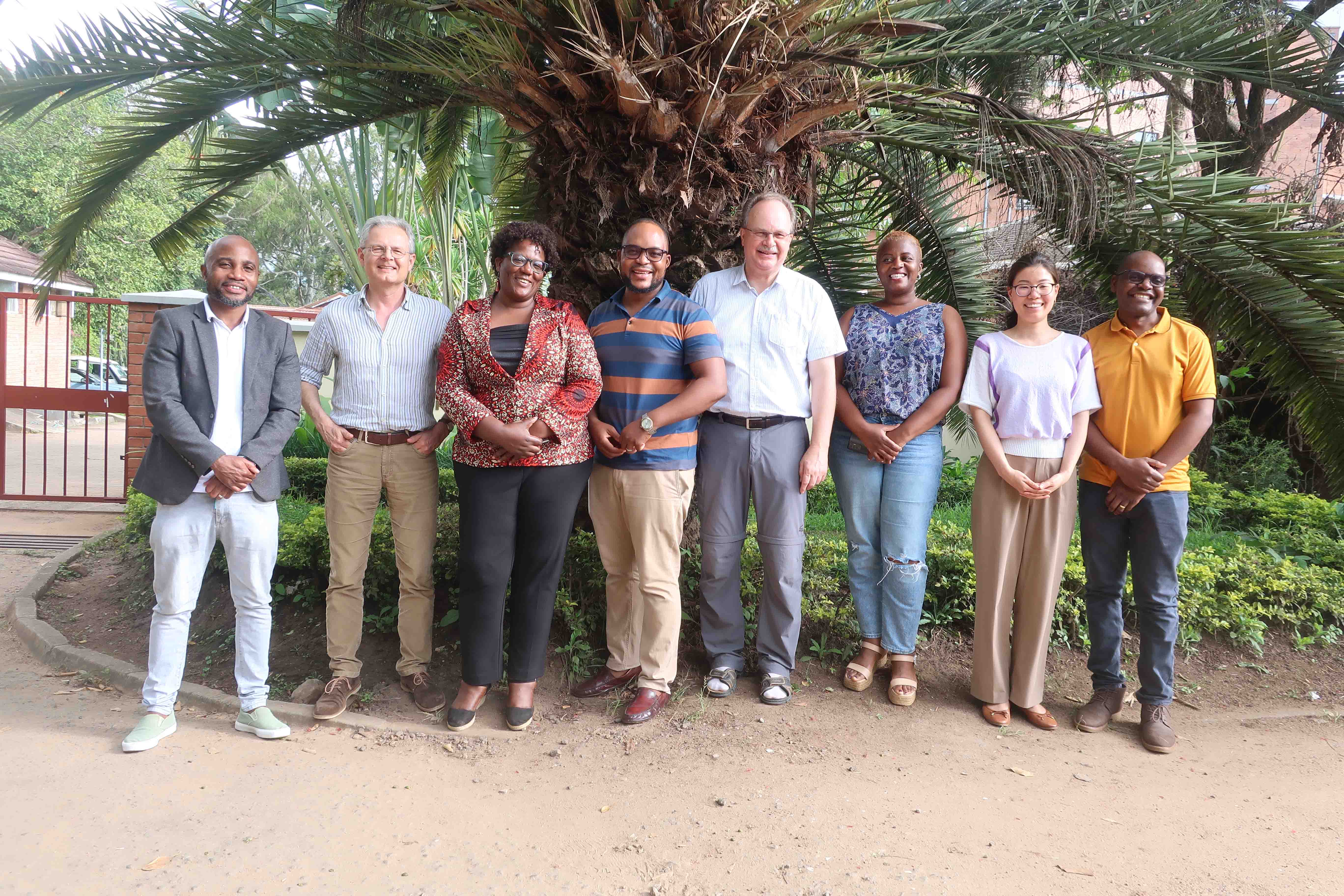
Key activities include establishing the EKC Global Child Health, coordinating projects, and implementing a five-year plan. The centre will support existing programmes in training, NCD care, and ultrasound, while launching education and research initiatives. These include conferences, training courses, postgraduate programmes, and research in areas such as neonatology and chronic diseases.
Long-term funding, strong governance, and capacity building ensure sustainability. Initial support relies on external funding for at least five years, followed by co-financing from partners. Integration into national structures ensures ownership and accountability, while collaboration with academic and governmental institutions strengthens resilience. Research and networking secure lasting impact.
The EKC Global Child Healthis integrated within PACHA, enabling a semi-autonomous model. It combines coordination, research, implementation, and policy advice. Strong international partnerships ensure collaboration. The scalable model can be adapted to other countries.
You can obtain more information in the press release: