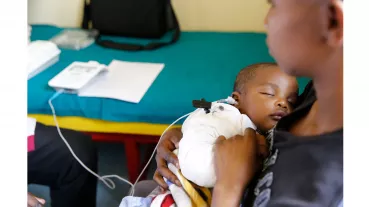
Getting the right support early: screening and early intevervention in rural Bangladesh

Situation:
The first years of a child’s life shape their future. Aged 3-4, just 20% of children with deafblindness are on track in their development, making them only half as likely to reach critical milestones – like sitting up, crawling or communicating - compared to children with other disabilities.
In Bangladesh, screening programmes for sight and hearing impairments are in their infancy and concentrate primarily on urban areas. In rural areas, young children and babies who are deafblind or have complex disabilities are at risk of being identified late or not at all, risking a lifetime of exclusion.
Objectives:
To improve the health and wellbeing of infants and babies with deafblindness and multiple disabilities in rural Bangladesh.
- Number of children with deafblindness or multiple disabilities identified through screening who have improved development outcomes
- Health workers have the skills and knowledge to identify and support children with sensory impairments
- Government officials promoting the adoption of the screening and early intervention model
- Screen 15,000 children (aged 0-5 years) risk factors of sight and hearing loss. Train 120 staff, community health workers, midwives, upazila health officials and volunteers.
- Provide early intervention support to 200 children with deafblindness or complex disabilities so they reach their development milestones. Reach 400 of their parents/caregivers with training, guidance and support so that they can care for them effectively.
- Awareness raising reaching 30,000 community members to build understanding of disability and tackle stigma
This project builds capacity of existing health services to identify and support children who are deafblind or have complex disabilities early. It trains health workers and partners with community health facilities, building knowledge and skills that will remain in the communities for years to come.
Many screening programmes for sight and hearing impairments in Bangladesh operate in urban areas. This programme explores how existing approaches can be adapted to the rural health system, creating a model that can be replicated and adopted in other rural areas in future.
Further information: Sense International - Supporting people with deafblindness - Sense International